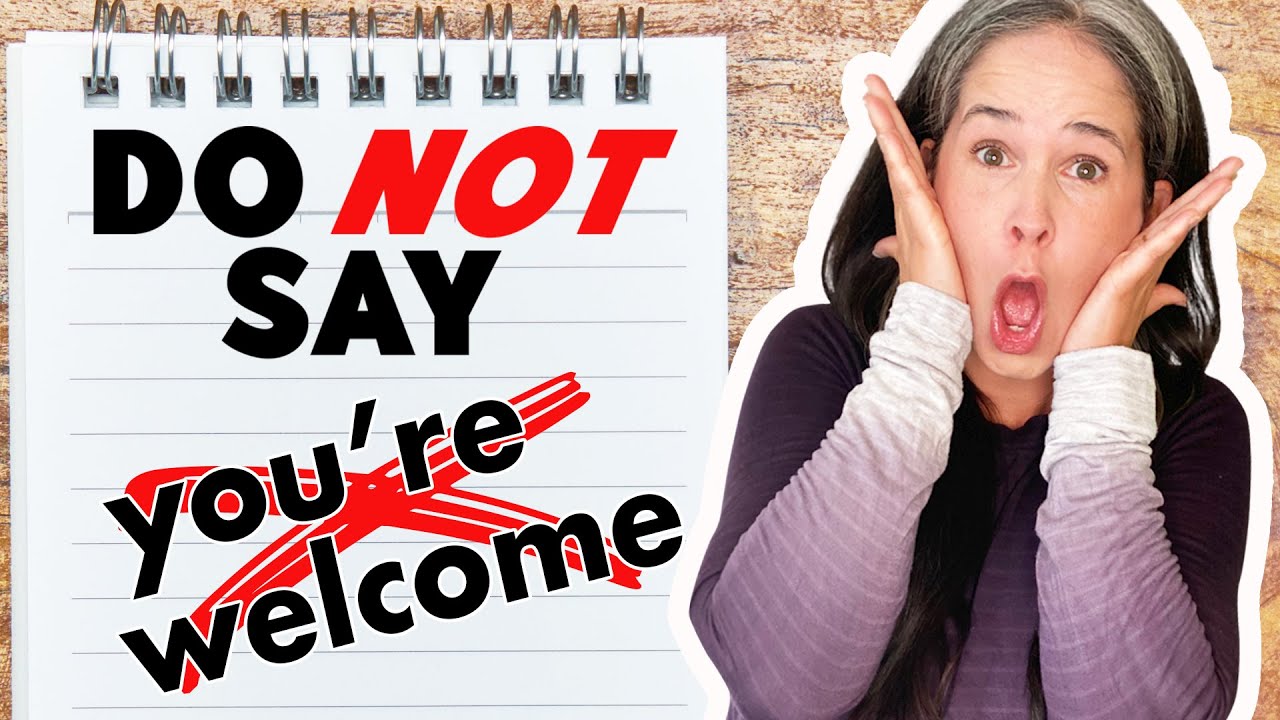
 Picture Source: Rachel's English
Hello, Mastiners! How was your day? Was that a beautiful or an awful day? No matter what, Mintea always hopes that all of us are always in a good health and blessed condition.
Do you still remember that around two weeks ago, we have learned about other words to say “Thank You”?
Did you read it? If you didn’t read it yet, let’s check it first in the following link: https://media.maberlian.sch.id/2022/01/other-words-to-say-thank-you
Mastiners, if we have already known some ways to say “Thank You”, then we also need to know how to respond to thank you. So far, are you still stuck with “you’re welcome”?
Did you ever consider whether your response is appropriate or not with the situation? No more need to be confused again. On this occasion, we will learn other ways to say you’re welcome.
Let’s check them out!
1. No problem
It can be used when our friends are thanking us and we feel unburdened to help them.
Example:
A: Thanks for helping me today.
B: No problem. I enjoyed helping you.
2. That’s alright
We might say "that's alright" if someone thanks us for doing something that we might not have wanted to do. However, it can also be quite warm depending on our intonation.
Example:
A: Thank you for picking me up from the cinema.
B: That’s alright.
3. No worries
It’s a very casual expression. We can use this one to respond to our friends in a relaxing circumstance because what we do for them is not burdensome, and we are happy to do it so they don't have to worry that they are bothering us.
Example:
A: Thanks for letting me know that my book is left in the classroom.
B: No worries. I think it’s better to tell you.
4. My pleasure This can be used to show that we enjoy helping others.
Example:
A: Thanks a bunch for taking the book for me.
B: My pleasure.
5. Anytime
This expression says that we don't mind helping the person and that they can ask for help at any time.
Example:
A: Thanks a lot for giving me the information.
B: Anytime.
6. Don’t mention it
We can use this expression in various situations and contexts. Literally, “don’t mention it” means “don’t say thank you”. It is usually used because what we have done for them does not burden us and we do not expect thanks from them.
Example:
A: Thank you very much for bringing my bag.
B: Oh. Don’t mention it.
Anyway, have you ever used those words? There are still others more. Keep reading!
7. It was nothing This expression is used to convey to others that helping them is not a hard job.
Example:
A: Thank you for giving me a lift.
B: Oh, it was nothing. I also have to go there.
8. I know you’d do the same for me
It is usually used to respond to people who are close to us. It shows that we want to help them because we believe in their loyalty.
Example:
A: I’d like to thank you for accompanying me to the bookstore.
B: Sure. I know you’d do the same for me if I ask you.
9. I’m glad I could help you
This expression is used to show that we are happy and grateful to help them.
Example:
A: It might be the worst day for me. Thanks for having me back.
B: I’m glad I could help you. I know you worked hard for this one.
10. It was the least I could do
This is a polite response to someone who thanks us. It is usually used when we feel like we have to do more to help.
Example:
A: Thanks a million for helping me prepare the script.
B: It was the least I could do. You have done a lot for this project.
Mastiners, those are 10 alternatives to respond to thank you. Let’s try to use them in our daily conversation to make our English more varied. See you at the next discussion!
References: https://efl.academy/how-to-respond-to-thank-you/ https://www.youtube.com/watch?v=F99JNqsfxlQ https://grammar.yourdictionary.com/writing/50-different-ways-say-youre-welcome https://dictionary.cambridge.org/dictionary/english/it-s-the-least-i-can-do